
Mother of vinegar - how do i use it?

Aktualisiert: 5. Mai
This blog entry is mostly for those who have purchased our Mother of Vinegar, and they are not sure how to use it.

But first, thank you for your purchase.
In order to learn how to use it, let's understand what Mother of Vinegar (MoV) actually is.
So, Mother of Vinegar is a "biofilm composed of a form of cellulose, yeast, and bacteria that sometimes develops on fermenting alcoholic liquids during the process that turns alcohol into acetic acid with the help of oxygen from the air and acetic acid bacteria". (Wikipedia)
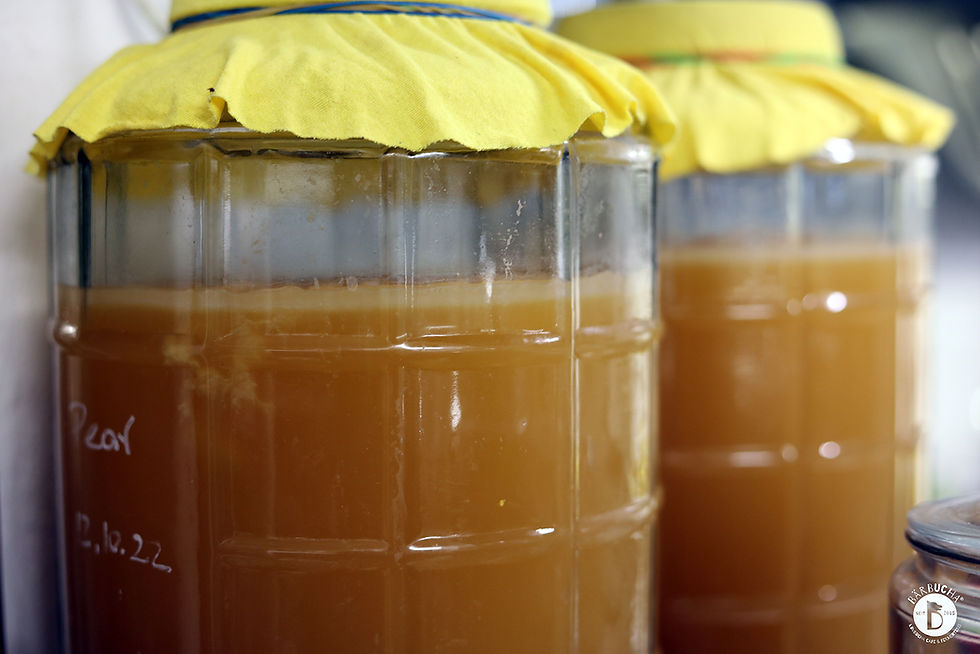
This cellulose biofilm can be seen on top of our Apple Vinegar.

Or here, on our Pear Vinegar.
When you purchase one of our MoVs, you will get it in a cryovac packaging looking like this.

It will be submerged in a living apple vinegar.
As an option, you can also get it in a glass jar, instead of plastic (and this is how we recommend it, as plastics and organic acids don't go so well together).

Before you learn how it should be used, it is a good idea to understand the whole process of vinegar making (apple vinegar in this case).
In order make apple vinegar, you need a glass or a small wood barrel (plastics and stainless steel containers are not recommended), apples, sugar and water.
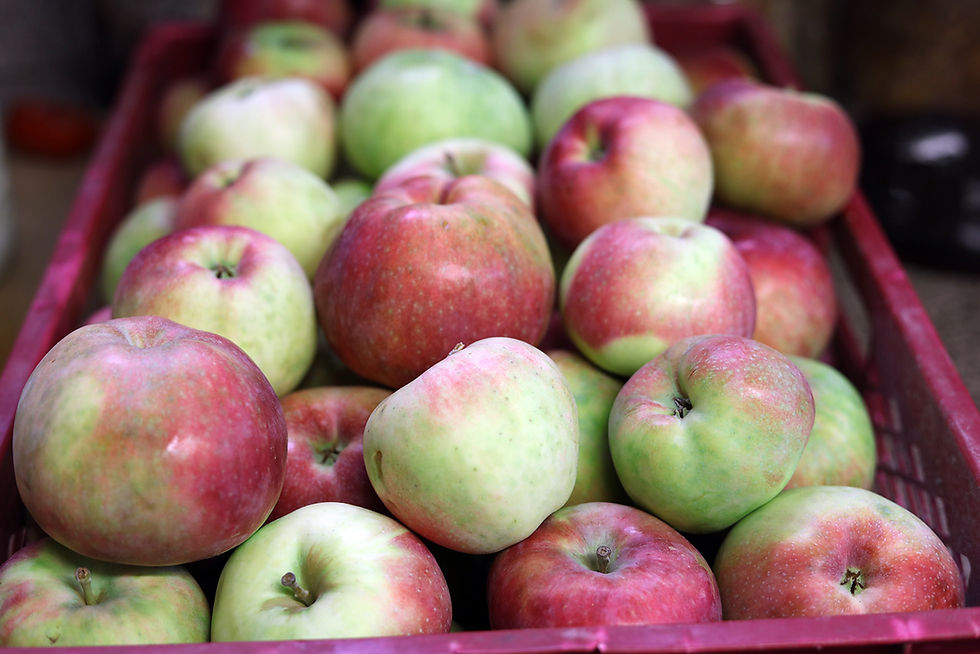
You should cut the apples into smaller pieces.

The more apples you will use, the better flavor you will get. Whether you use white or dark sugar is not that important. Organic is always better, and you should remember that the darker the sugar, the more molasses it will contain, and the vinegar will also be darker.
If you want your vinegar to have about 5% acidity, then you should use about 100-120 grams of sugar per L of water (5% acidity means 5% of organic acids and 95% of water
If you want to have a weaker vinegar, then you can use less sugar..
There are two stages which are required to make an apple vinegar. First one is the anaerobic fermentation and the second one is aerobic fermentation.
During the first process, bacteria and yeast break down organic matter during a fermentation, and that happens without oxygen. Which means that the glass (or other container) should be tightly closed. During this process ethanol (alcohol) is created by yeast during the conversion of sugar. And in order for this ethanol to reach a certain level and not to evaporate, the container with apples + sugar + water should stay closed the entire time.
This stage usually takes about a month. We let it go for a month and a half.

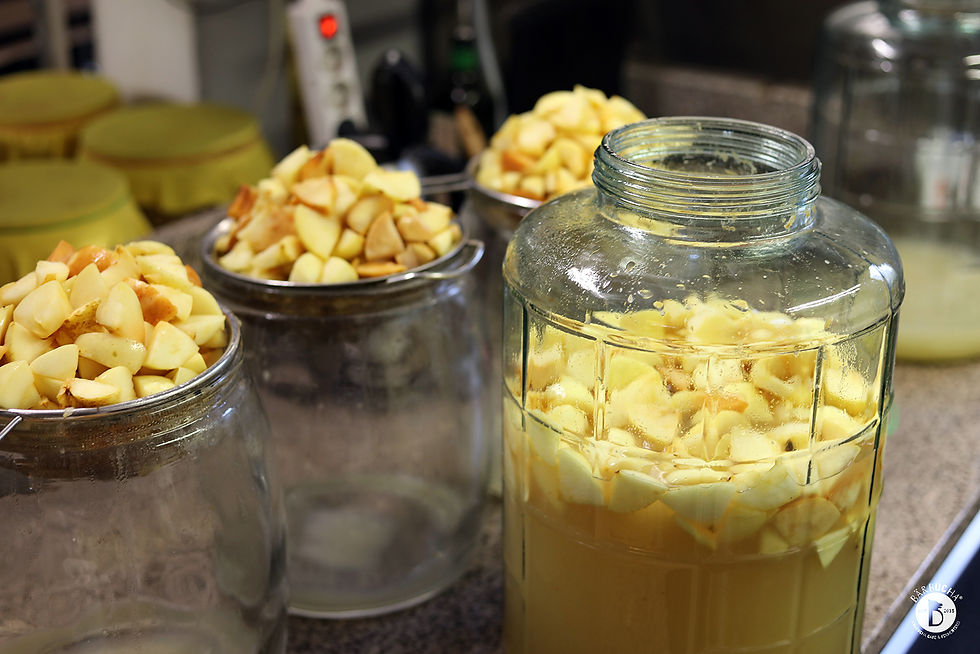
On the picture above, you can see two jars filled with apples, water and sugar during the anaerobic fermentation. The one on the right was recently set, and the one on the left is about two weeks old.
In the left jar, you can see fermentation bubbles near the lid, and you can see that the apples were pushed upwards (this is all normal, and this is what you should expect during this stage).
Obviously, when using smaller jars this first fermentation process can go a bit faster.
Temperature plays a crucial role.
So, after about a month, you should strain the apple, which you can discard at this point.
And you should keep just the liquid.
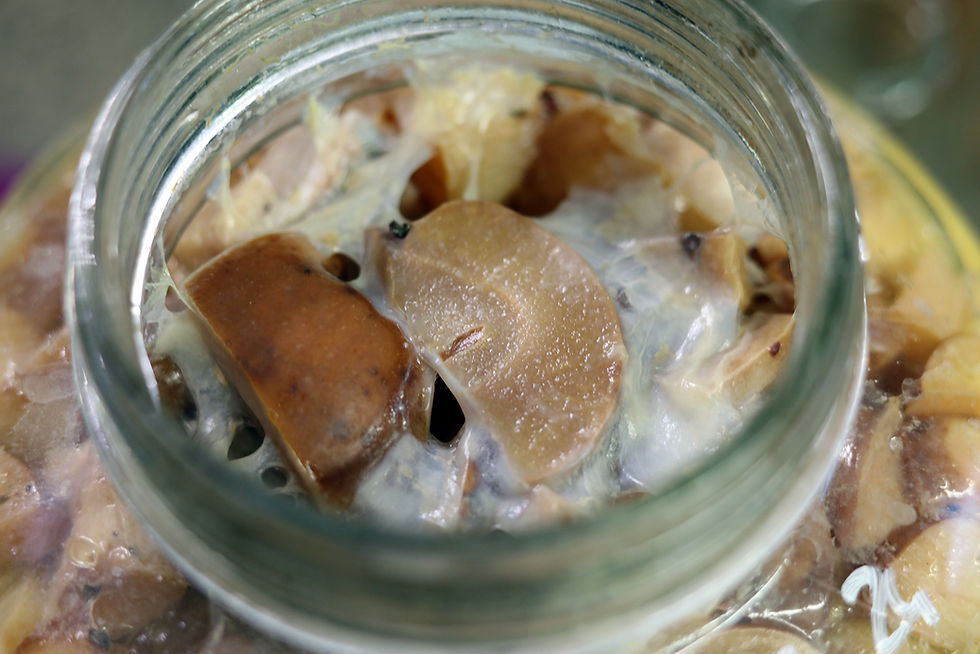
Sometimes when you open the lid after one moth, you might find a MoV forming on top of the apples, like on the picture below.
And now it's time for the second stage, which is the aerobic fermentation.
During this process, you keep the jar covered with a cloth, so that oxygen can get it.
From now on, the accumulated ethanol will be transformed into organic acids with the help of acetic acid bacteria.
This is also the time to add our Mother of Vinegar to your vinegar.
When you do that, add the included liquid (vinegar), too
The MoV will drop to the bottom of the glass, and this is quite OK.
Also, do not pay much attention to its shape, as it is irrelevant. Usually, when you receive one, it's shape might be a half a circle or a quarter circle.
Our MoVs are quite big, as we use different size glass jars ranging from 16-26 L, so before we send them to you we have to cut them in smaller pieces.

Here you can see two MoVs. One, on the very bottom was added and the one above it, which formed on top about a month later, also dropped to the bottom.
So, what happens when you add a Mother of Vinegar to your fermenting vinegar?
First, it will help with the aerobic fermentation by speeding it up.
And second, it will add acetic acid bacteria to your vinegar, thus it will stabilize it better, preventing Kahm yeasts from taking over.
This aerobic stage usually takes a month, or two.
We let our vinegar ferment for at least six months.
Now, is it necessary to buy and add a MoV to make a vinegar?
No, it's not. When everything is done how it should be a nice Mother of Vinegar should form on top of your vinegar.
Is it helpful? Yes, it is.
Do we add extra MoVs to our vinegar during the aerobic stage?
Yes, we do!
Below is a picture of a new MoV forming on top of our vinegar.
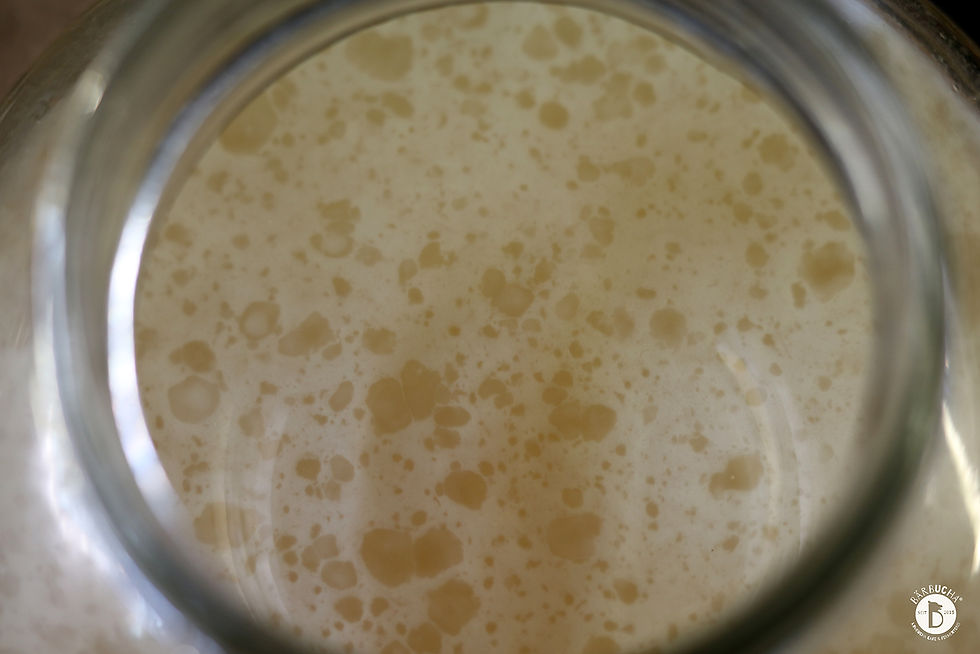
And the last possible question: Can I use this Mother of Vinegar to make other types of vinegar, other than apple?
Yes, definitely. It will work with all types of vinegar.
Over time, we have made different types of vinegar, like Quince, Elderberry, or even Stinging Nettle. And we used our extra MoVs to make all of them.
If you have read this blog entry before buying our Mother of Vinegar, you can get one by clicking the button below.


Kommentare